


日
 | ||||||||
 | ||||||||

 међународно
 међународно
| Редослед писања | |||
|---|---|---|---|

| |||
| Редослед писања | |||
|---|---|---|---|

| |||
Han character

日 (Kangxi radical 72, 日+0, 4 strokes, cangjie input 日 (A), четири-угла 60100, composition ⿴囗一)
- Кангци радикал #72, ⽇.
- Shuowen Jiezi radical №231
Usage notes
- Not to be confused with 曰 (Kangxi radical #73), which is generally wider and shorter.
Derived characters
- Додатак:Кинески радикал/日
- 𬽪, 𠯐, 𡉭, 𪥨, 𡥌, 𫴸, 𡯙, 𢁯, 抇, 汨, 𤝍, 阳, 𨑨, 𣏬, 𣬰, 𭴌, 𡯒, 𡯟, 𥎭, 𥘗, 衵, 𮇇, 𥿀, 𦨙, 蚎, 𧠗, 𧥵, 𧲥, 𧺝, 𧿭, 𡲉, 鈤, 䖑, 䫻(𫗇), 𩚣, 𫽰, 馹(驲), 䵒, 𪕈
- 欥, 炚, 甠, 圼, 妟, 𢗭, 杲, 炅, 𭴋, 𤘵, 𦐇, 𧦊, 𧰮, 𣃸, 𦃙, 𧏒, 𨍯, 𠘗, 𡦬, 𠕌, 𫧍, 𪜌, 間(间), 𧗧
- 㒲, 𠕾, 𠯭, 𡰶, 㞱, 𢎃, 䒤, 杳, 𣥜, 氜, 沓, 㸓, 者, 𤵖, 香, 音, 亯, 𫂵, 耆, 𧖮, 𡥨, 𡸱, 孴, 𢧋, 𡦏, 稥, 𦳜, 𪎗, 𮏥, 𪏰, 𡾡
Descendants
References
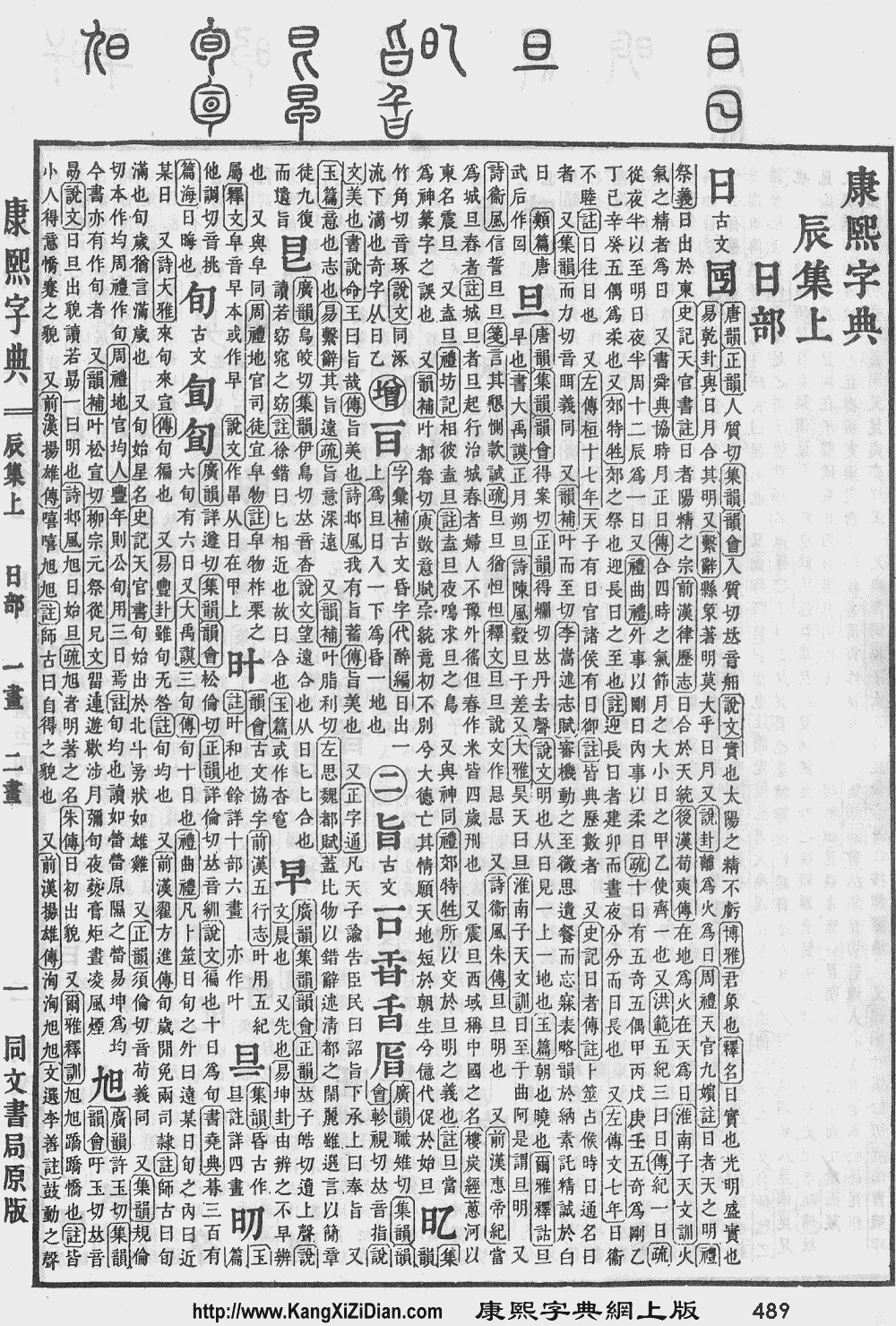
- KangXi: page 489, карактер 1
- Dai Kanwa Jiten: карактер 13733
- Dae Jaweon: страна 848, карактер 14
- Hanyu Da Zidian: том 2, страна 1482, карактер 1
- Unihan data за U+65E5
Further reading

 Кинески
 Кинески
Glyph origin
| Историјски облици карактера 日 | |||
|---|---|---|---|
| Shang | Warring States | Shuowen Jiezi (compiled in Han) | Liushutong (compiled in Ming) |
| Oracle bone script | Chu Slip and silk script | Small seal script | Transcribed ancient scripts |

|

|

|

|
| Знакови у истом фонетском низу (日) (Zhengzhang, 2003) | |
|---|---|
| Стари Кинески | |
| 涅 | |
| 捏 | |
| 篞 | *niːɡ |
| 衵 | *niɡ, *njiɡ |
| 日 | |
| 馹 | *njiɡ |
Pictogram (象形 (xiàngxíng)) – the Sun. A dot or line was added in the centre to distinguish it from visually similar characters, e.g. 囗 (early form of 丁). Compare earlier forms of the character with the astronomical and astrological symbol for the Sun (☉) and the Egyptian hieroglyph 𓇳.
Etymology 1
| једн. and трад. |
日 | |
|---|---|---|
| alternative forms | ||
From Proto-Sino-Tibetan *s-nəj. Cognate to Tibetan ཉི་མ (nyi ma, “sun, day”), Burmese နေ့ (ne., “day”), S'gaw Karen နံၤ (nĩ, “day”), and Nuosu ꑍ (nyip, “day, daytime”).
Pronunciation
Lua грешка in Модул:wuu-pron at line 210: Invalid syllable: 5nyiq,5zeq. Wugniu expected, but another romanisation is supplied..
Definitions
日
- (astronomy) Sun
- daytime; time between sunrise and sunset
- day; twenty-four hours
- everyday; daily; day-to-day
- day of the month
- some day; some other time
- former times; previous times; the past
- time; period; age
- Класификатор за days.
- Short for 日本 (Rìběn, “Japan; Japanese; Nippo-”):
- † Alternative form of 二 (èr, “two”).
- (obsolete) Short for 日斯巴尼亞/日斯巴尼亚 (“Spain”).
- (~母) (Chinese linguistics) the Middle Chinese initial of 日
Synonyms
- The dial-syn page 「太陽」 does not yet exist. Create the data page and the map!
- The dial-syn page 「白天」 does not yet exist. Create the data page and the map!
- The dial-syn page 「天」 does not yet exist. Create the data page and the map!
Compounds
Descendants
Etymology 2
| једн. and трад. |
日 | |
|---|---|---|
| alternative forms | 入 㒲 肏 | |
Essentially a substitute character for 入 (“to enter”) that preserves the expected modern pronunciation of 入; see the etymology there for more.
Pronunciation
Lua грешка in Модул:zh-pron at line 972: attempt to call upvalue 'explode_chars' (a nil value).
Definitions
日
- (dialectal Mandarin, dialectal Jin, dialectal Wu, dialectal Xiang, vulgar, often in abuses) to fuck; to have sexual intercourse with
- 狗日 ― gǒurì ― fucking
- 朱山也不敢踢我,甚至罵我說,日你媽,我的豆腐你也敢吃。 [MSC, trad.]
- From: 2014, 余显斌, 我真的很牛皮, in 《满族文学》, issue 6
- Zhū Shān yě bùgǎn tī wǒ, shènzhì mà wǒ shuō, rì nǐ mā, wǒ de dòufu nǐ yě gǎn chī. [Pinyin]
- Zhu Shan would no longer dare kick me, or insult me, and say "fuck you, how dare you flirt with my woman!"
朱山也不敢踢我,甚至骂我说,日你妈,我的豆腐你也敢吃。 [MSC, simp.]
Synonyms
- See 肏 § Synonyms.
Etymology 3
| једн. and трад. |
日 | |
|---|---|---|
Pronunciation
Lua грешка in Модул:zh-pron at line 972: attempt to call upvalue 'explode_chars' (a nil value).
Definitions
日
- Only used in 日磾/日䃅, a Han dynasty-era personal name borne by Jin Midi (金日磾/金日䃅工46工46工46工46) and Ma Midi (馬日磾/马日䃅工46工46工46工46).
Etymology 4
| За изговор и дефиниције од 日 – види 時. (Овај character, 日, је an ancient облик од 時.) |
References
- Multi-function Chinese Character Database (漢語多功能字庫)
- Dictionary of Chinese Character Variants (教育部異體字字典), A01771
- “Entry #810”, in 臺灣閩南語常用詞辭典 [Dictionary of Frequently-Used Taiwan Minnan] (overall work in Мандарин and Hokkien), Ministry of Education, R.O.C., 2023.
 Јапански
 Јапански
Kanji
Readings
- Go-on: にち (nichi, Jōyō)
- Kan-on: じつ (jitsu, Jōyō)
- Kun: ひ (hi, 日, Jōyō); か (ka, 日); び (bi); が (ga)
- Nanori: あき (aki); てる (teru); とき (toki); はる (haru); ひる (hiru); にっ (ni'); に (ni); いる (iru); す (su); につ (nitsu); あ (a); へ (he); こう (kō); たち (tachi); く (ku); くさ (kusa)
Compounds
Etymology 1
| Kanji in this term |
|---|
| 日 |
| にち Степен: 1 |
| goon |
/nʲitɨ/ → /nit͡ɕi/
From Middle Chinese 日.
The 呉音 (goon, literally “Wu sound”) reading, so likely the initial borrowing from Middle Chinese.
Pronunciation

Noun
日 (nichi)
Counter
日 (-nichi)
- ordinal day of a month
- 27日 ― nijūshichi-nichi ― the 27th
- number of days
- 誕生日まであと12日だ ― tanjōbi made ato jūni-nichi da ― My birthday is in 12 days.
Usage notes
Sometimes shortened to んち (-nchi) or ち (-chi).
Derived terms
See also
| Japanese number-counter combinations for 日 | ||||||||||
|---|---|---|---|---|---|---|---|---|---|---|
| 1(st) | 2(nd) | 3(rd) | 4(th) | 5(th) | 6(th) | 7(th) | 8(th) | 9(th) | 10(th) | |
| How many? | 一日 (ichinichi) | 二日 (futsuka) | 三日 (mikka) | 四日 (yokka) | 五日 (itsuka) | 六日 (muika) | 七日 (nanoka) 七日 (nanuka) |
八日 (yōka) | 九日 (kokonoka) | 十日 (tōka) |
| What day? | 一日 (tsuitachi) 一日 (ippi) | |||||||||
| 11(th) | 12(th) | 13(th) | 14(th) | 15(th) | 16(th) | 17(th) | 18(th) | 19(th) | 20(th) | |
| 十一日 (jūichinichi) | 十二日 (jūninichi) | 十三日 (jūsannichi) | 十四日 (jūyokka) | 十五日 (jūgonichi) | 十六日 (jūrokunichi) | 十七日 (jūshichinichi) | 十八日 (jūhachinichi) | 十九日 (jūkunichi) | 二十日 (hatsuka) | |
| 24(th) | 27(th) | 29(th) | 30(th) | 40(th) | 50(th) | 100(th) | 1,000(th) | 10,000(th) | ? | |
| 二十四日 (nijūyokka) | 二十七日 (nijūshichinichi) | 二十九日 (nijūkunichi) | 三十日 (sanjūnichi) 三十日 (misoka) |
四十日 (shijūnichi) 四十日 (yosoka) |
五十日 (gojūnichi) 五十日 (ika) |
百日 (hyakunichi) 百日 (momoka) |
千日 (sennichi) | 一万日 (ichimannichi) | 何日 (nannichi) | |
Affix
日 (nichi)
- sun
- daytime, daylight
- day
- Short for 日本 (Nihon, Nippon): Japan, Japanese, Nippo-
- Short for 日向国 (Hyūga-no-kuni): Hyūga Province
Derived terms
- 日日 (nichinichi), 日々 (nichinichi)
- 日英 (Nichi-Ei)
- 日月 (nichigatsu)
- 日銀 (Nichigin)
- 日月 (nichigetsu)
- 日限 (nichigen)
- 日時 (nichiji)
- 日常 (nichijō)
- 日南 (Nichinan)
- 日米 (Nichi-Bei)
- 日暮 (nichibo)
- 日没 (nichibotsu), 日没 (nichimotsu)
- 日夜 (nichiya)
- 日用 (nichiyō)
- 日曜 (nichiyō)
- 日輪 (nichirin)
- 日ロ (Nichi-Ro)
- 日露 (Nichi-Ro)
- 日課 (nikka)
- 日記 (nikki)
- 日脚 (nikkyaku)
- 日給 (nikkyū)
- 日系 (Nikkei)
- 日光 (nikkō)
- 日誌 (nisshi)
- 日射 (nissha)
- 日州 (Nisshū)
- 日照 (nisshō)
- 日食 (nisshoku)
- 日進 (nisshin)
- 日中 (nitchū)
- 日程 (nittei)
- 日葡 (Nippo)
- 日豊 (Nippō)
- 縁日 (ennichi)
- 隔日 (kakunichi)
- 元日 (gannichi)
- 期日 (kinichi)
- 吉日 (kichinichi)
- 抗日 (kōnichi)
- 今日 (konnichi)
- 在日 (zainichi)
- 親日 (shinnichi)
- 中日 (chūnichi)
- 駐日 (chūnichi)
- 半日 (hannichi)
- 反日 (hannichi)
- 日日 (hinichi)
- 毎日 (mainichi)
- 明日 (myōnichi)
- 命日 (meinichi)
- 来日 (rainichi)
- 日章旗 (Nisshōki)
- 明後日 (myōgonichi)
- 日進月歩 (nisshingeppo)
Etymology 2
| Kanji in this term |
|---|
| 日 |
| じつ Степен: 1 |
| kan'on |
/d͡ʑitʉ/ → /d͡ʑit͡su/ → /ʑit͡su/
From Middle Chinese 日. The 漢音 (kan'on, literally “Han sound”) reading, so likely a later borrowing from Middle Chinese.
Compare modern Min Nan 日 (ji̍t).
Pronunciation
Affix
日 (jitsu)
Derived terms
Etymology 3
| Kanji in this term |
|---|
| 日 |
| ひ Степен: 1 |
| kun'yomi |
⟨pi1⟩ → */pʲi/ → /ɸi/ → /hi/
From Old Japanese.
Alternative forms
- (sun, sunlight, daytime): 陽
Pronunciation
Audio: (file)
Noun
日 (hi)
- the sun
- sunlight, sunshine
- Синоним: 日光 (nikkō)
- daytime, daylight
- Синоним: 昼間 (hiruma)
- a day
- time and date
- a daily Галицијски
- the weather
- Синоним: 天気 (tenki)
- a Галицијски case, event, situation
- the times Галицијски
- an auspicious or inauspicious aspect of a given day
- Синоним: 日柄 (higara)
- a 家紋 (kamon, “family crest”) with a sun-shaped design
Derived terms
Etymology 4
| Kanji in this term |
|---|
| 日 |
| か Степен: 1 |
| kun'yomi |
From Old Japanese.
Counter
日 or 日 (ka or counter) [[Категорија:Јапански Шаблон:error|か]]
Derived terms
References
 Корејски
 Корејски
Etymology
From Middle Chinese 日.
| Historical Readings | ||
|---|---|---|
| Dongguk Jeongun Reading | ||
| Dongguk Jeongun, 1448 | ᅀᅵᇙ〮 (Yale: zílq) | |
| Middle Korean | ||
| Text | Eumhun | |
| Gloss (hun) | Reading | |
| Hunmong Jahoe, 1527[1] | 날〮 (Yale: nál) | ᅀᅵᆯ〮 (Yale: zíl) |
Pronunciation
- (SK Standard/Seoul) IPA(кључ): [iɭ]
- Phonetic hangul: [일]
Hanja

- Hanja form? of 일 (“day”).
- Hanja form? of 일 (“sun; daytime”).
- Hanja form? of 일 (“Short for 일요일(日曜日) (iryoil, “Sunday”).”).
Compounds
Proper noun
| Hanja in this term |
|---|
| 日 |
日 (il) (hangeul 일)
Usage notes
In news headlines, this is almost always written solely in the Hanja form, even in contemporary Korean text otherwise devoid of any Hanja.
References
- 국제퇴계학회 대구경북지부 (國際退溪學會 大邱慶北支部) (2007). Digital Hanja Dictionary, 전자사전/電子字典. [2]
Okinawan
Kanji
Readings
Compounds
Old Japanese
Compounds
Etymology 1
From Proto-Japonic *pi.
Distinct from 火 (pi2, “fire”). See Jōdai Tokushu Kanazukai for details on Old Japanese readings.
Noun
日 (pi1) (Шаблон:head-lite/form)
- the sun
- sunlight, sunshine
- daytime, daylight
- a day
- a reference to the imperial family or lineage, thought to be descended from the sun goddess Amaterasu
Derived terms
See 日/derived terms § Old_Japanese_etymology_1.
Descendants
See also
Etymology 2
(This etymology is missing or incomplete. Please add to it, or discuss it at the Etymology scriptorium.)
Suffix
日 (-ka) (Шаблон:head-lite/form)
Derived terms
See 日/derived terms § Old_Japanese_etymology_2.
Descendants
- Јапански: 日 (-ka)
Etymology 3
Apophonic form of ka above, possibly by the fusion of ancient nominal particle い (i).
Noun
日 (ke2) (Шаблон:head-lite/form)
- (plural only) days
Derived terms
See 日/derived terms § Old_Japanese_etymology_3.
 Вијетнамски
 Вијетнамски
Han character
日: Hán Việt readings: nhật-tdcndg;tdcntd;gdhn (
日: Nôm readings: nhặt-tdcndg;tdcntd;gdhn;btcn;taberd, nhật-tdcndg;tdcntd;taberd, nhạt-tdcntd;gdhn, nhựt-tdcntd;taberd, nhờn-tdcndg
Compounds
References
- Странице са грешкама у скрипти
- Карактер оквири са сликама
- CJK Unified Ideographs блок
- Han script characters
- Kangxi Radicals блок
- Међународни говор
- Међународни леме
- Међународни symbols
- Међународни terms with redundant script codes
- Међународни terms with redundant head parameter
- Међународни terms with non-redundant non-automated sortkeys
- Стране са 2 уноса
- Хан текст карактери
- Shuowen radicals
- Српскохрватски terms in nonstandard scripts
- Кинески говор
- Хан пиктограми
- Кинески изрази наслеђени од Proto-Sino-Tibetan
- Кинески термини изведени од Proto-Sino-Tibetan
- S'gaw Karen terms with non-redundant manual transliterations
- Кинески Хан карактери
- zh:Stars
- Мандарин terms with usage examples
- Chinese redlinks/zh-l
- Chinese short forms
- Chinese terms with obsolete senses
- Кинески terms with obsolete senses
- zh:Linguistics
- Јапански terms with non-redundant manual transliterations
- Okinawan terms with non-redundant manual transliterations
- Вијетнамски terms with redundant script codes
- Mandarin Chinese
- Jin Chinese
- Wu Chinese
- Xiang Chinese
- Кинески vulgarities
- Кинески links with redundant wikilinks
- Кинески links with redundant alt parameters
- Мандарин terms with quotations
- Кинески црвене везе/zh-see
- Кинески terms with redundant script codes
- zh:Beginning
- Јапански индекс
- Јапански terms with redundant transliterations
- Јапански kanji with goon reading にち
- Јапански kanji with kan'on reading じつ
- Јапански kanji with kun reading ひ
- Јапански kanji with kun reading か
- Јапански kanji with kun reading び
- Јапански kanji with kun readings missing okurigana designation
- Јапански kanji with kun reading が
- Јапански kanji with nanori reading あき
- Јапански kanji with nanori reading てる
- Јапански kanji with nanori reading とき
- Јапански kanji with nanori reading はる
- Јапански kanji with nanori reading ひる
- Јапански kanji with nanori reading にっ
- Јапански kanji with nanori reading に
- Јапански kanji with nanori reading いる
- Јапански kanji with nanori reading す
- Јапански kanji with nanori reading につ
- Јапански kanji with nanori reading あ
- Јапански kanji with nanori reading へ
- Јапански kanji with nanori reading こう
- Јапански kanji with nanori reading たち
- Јапански kanji with nanori reading く
- Јапански kanji with nanori reading くさ
- Јапански термини који се пишу са 日 читани као にち
- Јапански термини читани са goon
- Јапански terms with non-redundant non-automated sortkeys
- Јапански термини изведени од Middle Chinese
- Јапански термини са ИПА изговором
- Requests for audio pronunciation in Јапански entries
- Јапански links with redundant wikilinks
- Јапански именице
- Јапански terms spelled with first grade kanji
- Јапански terms written with one Han script character
- Јапански terms spelled with 日
- Јапански single-kanji terms
- Јапански short forms
- Јапански леме
- Јапански counters
- Јапански terms with usage examples
- Јапански terms with non-redundant manual script codes
- ja:Време
- Јапански affixes
- Јапански термини који се пишу са 日 читани као じつ
- Јапански термини читани са kan'on
- Јапански термини који се пишу са 日 читани као ひ
- Јапански термини читани са kun'yomi
- Јапански изрази наслеђени од Old Japanese
- Јапански термини изведени од Old Japanese
- Јапански појмови са аудио везама
- Јапански термини који се пишу са 日 читани као か
- Јапански terms with multiple readings
- ja:Time
- Корејски говор
- Корејски термини изведени од Middle Chinese
- Корејски terms with non-redundant non-automated sortkeys
- Корејски terms with redundant script codes
- Корејски Хан карактери
- Корејски властите именице
- Корејски terms with non-redundant manual transliterations
- Корејски short forms
- ko:Days of the week
- Okinawan Han characters
- Grade 1 kanji
- Okinawan terms with redundant transliterations
- Okinawan kanji with kun reading ふぃー
- Okinawan kanji with on reading なち
- Okinawan kanji with on reading にち
- Requests for attention concerning Okinawan
- Okinawan kanji with on reading じち
- Okinawan kanji with historical on reading じつぃ
- Old Japanese изрази наслеђени од Proto-Japonic
- Old Japanese термини изведени од Proto-Japonic
- Old Japanese terms with non-redundant non-automated sortkeys
- Old Japanese nouns
- Old Japanese lemmas
- Pages using lite templates
- Requests for etymologies in Old Japanese entries
- Old Japanese suffixes
- Old Japanese pluralia tantum
- Old Japanese terms with usage examples
- Requests for translations of Old Japanese usage examples
- Вијетнамски говор
- Vietnamese Han tu
- Vietnamese Nom
- CJKV radicals