


元
 | ||||||||

 међународно
 међународно
| Редослед писања | |||
|---|---|---|---|

| |||
Han character
元 (Kangxi radical 10, 儿+2, 4 strokes, cangjie input 一一山 (MMU), четири-угла 10211, composition ⿱一兀 or ⿱二儿)
Derived characters
- 㐾 𠰂 坃 妧 岏 忨 抏 沅 远 阮 朊 杬 玩 䏓 盶 𦨞 蚖 𠒑 䛃 貦 䡇 酛 鈨 䬧 䯈 魭 翫
- 刓 𠠺 㝴 邧 㪴 㒬 兘 㒮 頑(顽) 䲮
- 坖 䲶 黿(鼋)
- 完 芫 笎 䦎 䨌 髨
- 园 衏
- 㓂 冦 宼 寇 窛 𢒎 𠖈 𠖝 𠖤 𠖨
References
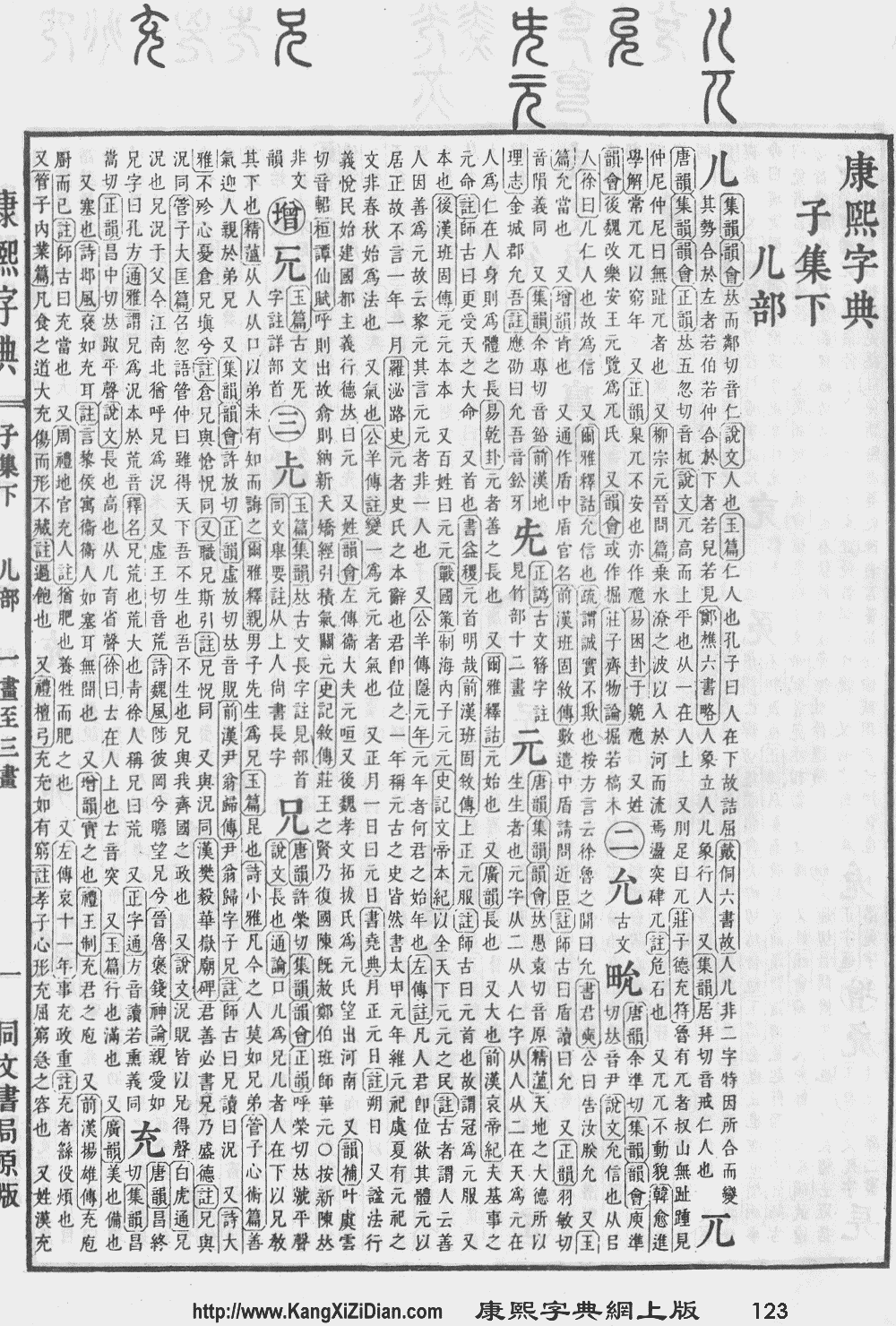
- KangXi: page 123, карактер 6
- Dai Kanwa Jiten: карактер 1340
- Dae Jaweon: страна 258, карактер 3
- Hanyu Da Zidian: том 1, страна 264, карактер 6
- Unihan data за U+5143
Further reading

 Кинески
 Кинески
| једн. and трад. |
元 | |
|---|---|---|

Glyph origin
| Историјски облици карактера 元 | ||
|---|---|---|
| Shang | Shuowen Jiezi (compiled in Han) | Liushutong (compiled in Ming) |
| Oracle bone script | Small seal script | Transcribed ancient scripts |

|

|

|
| Знакови у истом фонетском низу (元) (Zhengzhang, 2003) | |
|---|---|
| Стари Кинески | |
| 冠 | |
| 莞 | |
| 脘 | |
| 筦 | |
| 梡 | |
| 岏 | |
| 刓 | |
| 园 | |
| 忨 | |
| 蚖 | |
| 黿 | |
| 抏 | |
| 玩 | |
| 貦 | |
| 翫 | |
| 妧 | |
| 完 | |
| 捖 | |
| 垸 | |
| 綄 | |
| 院 | |
| 皖 | |
| 晥 | |
| 浣 | |
| 頑 | |
| 睆 | |
| 鯇 | |
| 元 | |
| 沅 | |
| 芫 | |
| 杬 | |
| 邧 | |
| 阮 | |
| 俒 | |
Pictogram (象形 (xiàngxíng)) – a figure with two lines 二 for a head (one connected to body, one above it), emphasizing the head.
Etymology 1
Possibly from Proto-Sino-Tibetan *m/s-gaw (“head”), with a noun-forming suffix *-n (Schuessler, 2003; STEDT). If so, cognate with 后 (“ruler; lord; queen”), Tibetan མགོ (mgo, “head; summit; beginning”), མགོན (mgon, “protector; master; lord”), Garo sko (“skull”), Northern Tujia kho⁵⁵ pa⁵⁵ (“head”) (Schuessler, 2007; STEDT). 原 (“source; origin; basic; primary”) and 黿 (“large turtle”) may be the same word (Schuessler, 2007). It may also be related to 君 (“lord; prince; ruler”), 尹 (“magistrate; governor”), 侯 (“marquis”) (Mei, 1985).
The name of the dynasty comes from the I Ching:
- 大哉乾元,萬物資始,乃統天。 [Pre-Classical Chinese, trad.]
- From: I Ching, 11th – 8th century BCE, translated based on James Legge's version
- Dà zāi qián yuán, wànwù zī shǐ, nǎi tǒng tiān. [Pinyin]
- Vast is the ‘great and originating (power)’ indicated by Qian! All things owe to it their beginning: - it contains all the meaning belonging to (the name) heaven.
大哉干元,万物资始,乃统天。 [Pre-Classical Chinese, simp.]
Pronunciation
Lua грешка in Модул:wuu-pron at line 210: Invalid syllable: 3nyoe,3hhyoe. Wugniu expected, but another romanisation is supplied..
Definitions
元
- † head
- first; primary; head; chief
- basic; fundamental
- origin; source
- Синоними: 原
- meta-
- Класификатор за yuan or dollars.
- (mathematics) variable; unknown; element
- (~朝) Yuan Dynasty
- 元曲 ― yuánqū ― Yuan dynasty theater
- (~日) (telegraphy) the thirteenth day of a month
- A презиме..
- 元好問/元好问 ― Yuán Hàowèn ― Yuan Haowen (Jin dynasty poet)
Synonyms
See also
Compounds
Lua грешка in Модул:zh/templates at line 32: This template has been deprecated. Please use Template:col3 instead..
Descendants
Etymology 2
| За изговор и дефиниције од 元 – види 圓. (Овај character, 元, је the draft (1955) first-round simplified and second-round simplified облик од 圓.) |
References
 Јапански
 Јапански
Kanji
Readings
- Go-on: ごん (gon)
- Kan-on: げん (gen, Jōyō)←げん (gen, historical)←ぐゑん (gwen, ancient)
- Tō-on: がん (gan, Jōyō)←ぐわん (gwan, historical)
- Kun: もと (moto, 元, Jōyō); こうべ (kōbe, 元)
- Nanori: はじめ (hajime)
Compounds
- 元気 (genki)
- 元凶 (genkyō)
- 元金 (gankin)
- 元号 (gengō)
- 元日 (ganjitsu)
- 元首 (genshu), 元首 (motokubi)
- 元帥 (gensui)
- 元祖 (ganso)
- 元素 (genso)
- 元旦 (gantan)
- 元朝 (ganchō), 元朝 (genchō)
- 元服 (genpuku)
- 元本 (ganpon)
- 元来 (ganrai)
- 元悪 (gen'aku)
- 元価 (genka)
- 元兇 (genkyō)
- 元勲 (genkun)
- 元軍 (gengun)
- 元元 (motomoto), 元々 (motomoto)
- 元高 (motodaka)
- 元三 (Motomi)
- 元始 (genshi)
- 元手 (motode)
- 元鞘 (motosaya)
- 元職 (genshoku)
- 元栓 (motosen)
- 元値 (motone)
- 元帳 (motochō)
- 元締 (motoji)
- 元入金 (motonyūkin)
- 元年 (gannen)
- 元標 (genpyō)
- 元方 (motokata)
- 元利 (ganri)
- 元老 (genrō)
- 元禄 (genroku)
- 元寇 (genkō)
- お手元 (otemoto), 御手元 (otemoto)
Etymology 1
| Kanji in this term |
|---|
| 元 |
| もと Степен: 2 |
| kun'yomi |
| Alternative spellings |
|---|
| 本 原 基 素 |
⟨mo2to2⟩ → /moto/
From Old Japanese. Cited to the Kojiki of 712 CE.[1] From Proto-Japonic *mətə. Cognate with Okinawan 元 (mutu).
Pronunciation
Noun
元 (moto)
- cause, origin
- basis, foundation
- cost
- 元がとれる
- moto ga toreru
- to be able to cover the cost
- 元がとれる
- (finance) capital
- 2000円の元を取る
- nisen-en no moto o toru
- to get one's 2000 yen's worth
- (literally, “to take the 2000 yen principal”)
- 2000円の元を取る
- principal
Derived terms
Prefix
元 (moto-)
Etymology 2
| Kanji in this term |
|---|
| 元 |
| げん Степен: 2 |
| kan'on |
From the Middle Chinese-derived reading of the kanji characters.
Proper noun
元 (Gen)
- the Yuan dynasty (1271-1368)
Etymology 3
From 始め (hajime, “beginning”).
Pronunciation
Proper noun
元 or 元 (hajime or proper) [[Категорија:Јапански Шаблон:error|はしめ]]
- a male дато име
References
 Корејски
 Корејски
Hanja
Okinawan
Kanji
Readings
Compounds
Alternative forms
Etymology
| Kanji in this term |
|---|
| 元 |
| むとぅ Grade: 2 |
| kun’yomi |
| Kanji in this term |
|---|
| 元 |
| むーとぅ Grade: 2 |
| kun’yomi |
From Proto-Ryukyuan *moto, from Proto-Japonic *mətə. Cognate with mainland Јапански 元 (moto).
Noun
元 (hiragana むとぅ, rōmaji mutu, alternative reading むーとぅ, rōmaji mūtu)
References
- “ムトゥ” in Okinawa Center of Language Study, Shuri-Naha Dialect Dictionary (archived; reopens 2024).
- “ムートゥ” in Okinawa Center of Language Study, Shuri-Naha Dialect Dictionary (archived; reopens 2024).
 Вијетнамски
 Вијетнамски
Han character
- source, origin, base
- a family name
元 (кинески)

Изговор:

Радикал:
- 儿 10.004
Значења:
- "јуан(валута)
члан примарни, први"
Примери:
Синоними:
- ...
Хомофони:
Хомографи:
- ...
ХСК ниво:
- 1
Асоцијације:
- ...
Изведене речи:
- ...
Сродни чланци са Википедије:
Преводи
|
|
Референце
Pleco
- Странице са грешкама у скрипти
- Карактер оквири са сликама
- CJK Unified Ideographs блок
- Han script characters
- Међународни говор
- Међународни леме
- Међународни symbols
- Међународни terms with redundant script codes
- Међународни terms with redundant head parameter
- Међународни terms with non-redundant non-automated sortkeys
- Стране са 2 уноса
- Стране са nonstandard language headings
- Стране са raw sortkeys
- Han char with multiple ids
- Хан текст карактери
- Енглески terms in nonstandard scripts
- Кинески говор
- Хан пиктограми
- Northern Tujia terms in nonstandard scripts
- Literary Chinese terms with quotations
- Кинески Хан карактери
- Chinese terms with obsolete senses
- Мандарин terms with usage examples
- Literary Chinese terms with usage examples
- zh:Telegraphy
- Кинески презимена
- zh:Chinese dynasties
- Вијетнамски terms with redundant script codes
- Кинески црвене везе/zh-see
- zh:Beginning
- zh:Money
- Јапански индекс
- Јапански terms with redundant transliterations
- Јапански terms with non-redundant manual transliterations
- Јапански kanji with goon reading ごん
- Јапански kanji with kan'on reading げん
- Јапански kanji with historical kan'on reading げん
- Јапански kanji with ancient kan'on reading ぐゑん
- Јапански kanji with tōon reading がん
- Јапански kanji with historical tōon reading ぐわん
- Јапански kanji with kun reading もと
- Јапански kanji with kun reading こうべ
- Јапански kanji with nanori reading はじめ
- Јапански термини који се пишу са 元 читани као もと
- Јапански термини читани са kun'yomi
- Јапански terms with non-redundant non-automated sortkeys
- Јапански изрази наслеђени од Old Japanese
- Јапански термини изведени од Old Japanese
- Јапански изрази наслеђени од Proto-Japonic
- Јапански термини изведени од Proto-Japonic
- Јапански термини са ИПА изговором
- Јапански links with redundant wikilinks
- Јапански именице
- Јапански terms spelled with second grade kanji
- Јапански terms written with one Han script character
- Јапански terms spelled with 元
- Јапански single-kanji terms
- Japanese terms with usage examples
- Јапански термини са примерима коришћења
- ja:Finance
- Јапански links with redundant alt parameters
- Јапански леме
- Јапански prefixes
- Јапански термини који се пишу са 元 читани као げん
- Јапански термини читани са kan'on
- Јапански термини изведени од Middle Chinese
- Јапански proper nouns
- Јапански terms with multiple readings
- Јапански дата имена
- Јапански male дата имена
- Корејски говор
- Корејски Хан карактери
- Корејски terms with non-redundant non-automated sortkeys
- Okinawan Han characters
- Grade 2 kanji
- Okinawan terms with redundant transliterations
- Okinawan terms with non-redundant manual transliterations
- Okinawan kanji with kun reading むとぅ
- Okinawan kanji with kun reading むーとぅ
- Okinawan kanji with on reading ぐゎん
- Okinawan kanji with on reading じん
- Okinawan terms spelled with 元 read as むとぅ
- Okinawan terms read with kun'yomi
- Okinawan terms with redundant sortkeys
- Okinawan terms spelled with 元 read as むーとぅ
- Okinawan terms with non-redundant non-automated sortkeys
- Okinawan изрази наслеђени од Proto-Ryukyuan
- Okinawan термини изведени од Proto-Ryukyuan
- Okinawan изрази наслеђени од Proto-Japonic
- Okinawan термини изведени од Proto-Japonic
- Okinawan леме
- Okinawan nouns
- Okinawan words with multiple readings
- Okinawan terms spelled with second grade kanji
- Okinawan terms written with one Han script character
- Okinawan terms spelled with 元
- Okinawan single-kanji terms
- Okinawan terms with redundant script codes
- Okinawan terms with redundant head parameter
- Okinawan уноси са нетачним заглављем језика
- ryu:Finance
- Вијетнамски говор
- Кинеска реч
- Речи направљене аутоматизмом